Loading...
Serving South Burlington, VT and surrounding areas. (802) 352-8211
If your first floor is cold all winter and your heating bills keep climbing, your basement is likely where the heat is escaping. We seal and insulate South Burlington basements so your whole home stays warm.
Basement insulation in South Burlington stops heat from escaping through your foundation walls and floor framing, most jobs take one to two days, and homeowners typically notice warmer floors and lower heating costs within the first full winter.
South Burlington winters are long and hard. If your home was built before the 1990s, the basement is almost certainly the weakest link in your home's thermal envelope. Heat rises from your furnace, escapes through uninsulated walls and rim joists, and you pay for it every month from October through April.
Basement insulation paired with crawl space insulation gives below-grade spaces a complete thermal upgrade - addressing every path cold air uses to get into your living areas.
If your energy costs climb sharply from November through March and your home still feels drafty, your basement is likely one of the biggest culprits. South Burlington winters are long and severe, and an uninsulated or under-insulated basement accounts for a significant share of a home's total heat loss. This is one of the most common and most fixable energy problems in older homes here.
Cold floors and drafty lower-level rooms are a classic sign that cold air is rising from an uninsulated basement below. In South Burlington homes built before the 1990s, the floor framing between the basement and first floor is often the weakest link in the thermal envelope. If you notice the temperature difference most on winter mornings before the heat has been running long, this is almost certainly the cause.
After a South Burlington winter, seeing moisture on foundation walls is not unusual - but recurring staining, white mineral deposits, or actual dampness on the walls signals that water is moving through your foundation. Insulating over that without fixing it first will make things worse. A good contractor will flag this during the estimate and recommend addressing it before any work begins.
A persistent musty smell in the basement is often a sign of moisture and early mold growth - both made worse by poor insulation and air sealing. South Burlington's spring snowmelt season puts real pressure on basement walls, and homes without proper vapor management tend to show this problem first through smell. If the odor is seasonal and worse in April and May, it is worth having a contractor assess the situation.
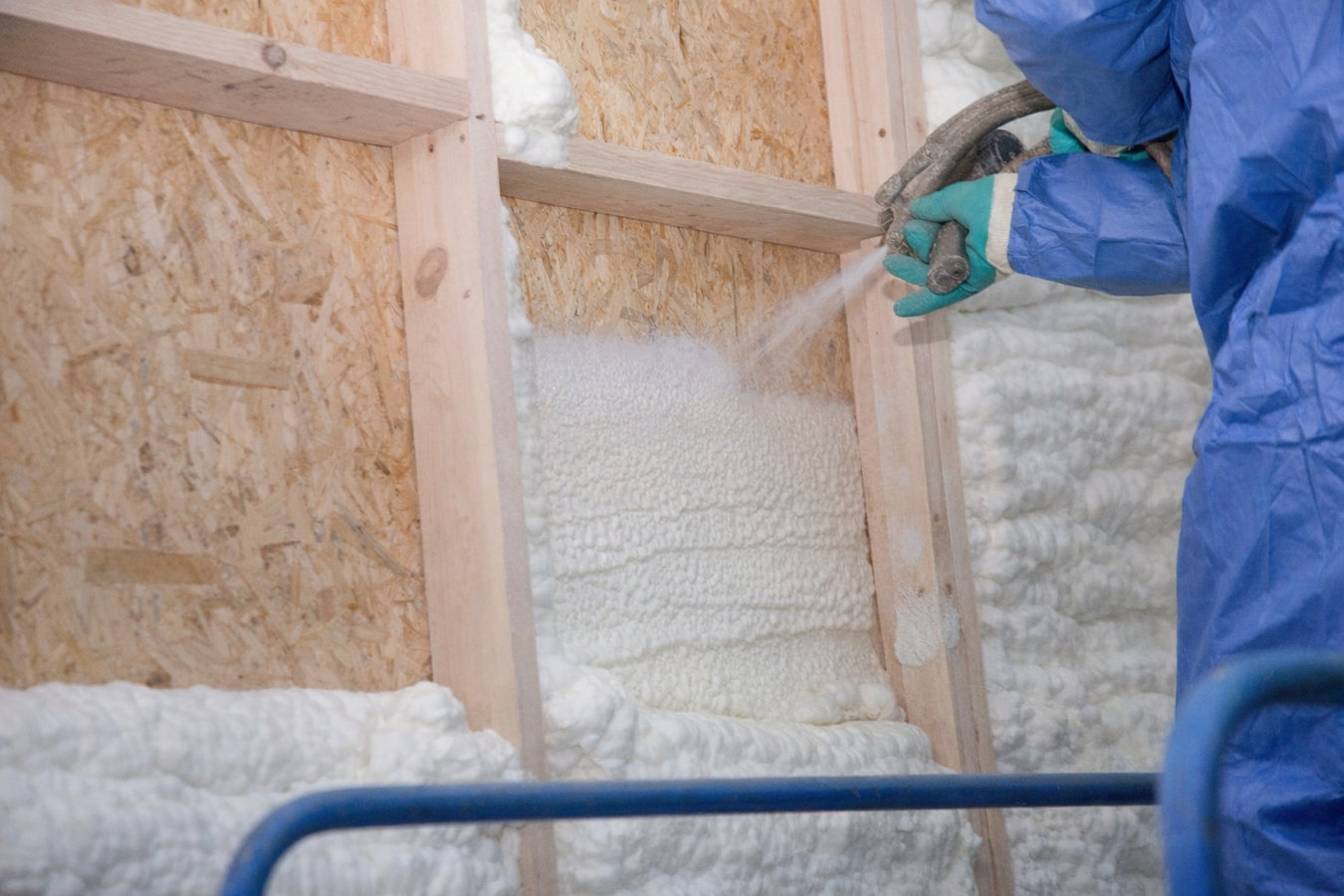
We handle the full scope of basement insulation work - from sealing the rim joist (the framing at the top of your foundation wall, one of the most common sources of heat loss in older Vermont homes) to insulating the walls or ceiling, depending on how you use the space. Every job starts with an assessment for moisture and air gaps before any material goes in. We also install closed-cell foam insulation in basements where moisture resistance and high R-value per inch are priorities.
For South Burlington homeowners who want a whole-home approach, basement insulation works best alongside crawl space insulation - both services address the below-grade spaces where cold air enters and heat escapes. We can assess both areas on the same visit and give you a combined scope of work.
Best for homeowners who use their basement regularly or plan to finish it - brings the full space into your home's heated envelope.
A lower-cost option for homeowners with purely mechanical or storage basements who want to improve first-floor comfort without conditioning the full basement.
Addresses the single most common source of heat loss and air infiltration in older South Burlington homes - often done alongside either wall or ceiling work.
Ideal for homes with moisture concerns or where maximum R-value in a thin profile is needed, such as finished basement walls or tight crawl space conditions.
South Burlington sits in a climate zone where winters are long, temperatures drop well below zero, and the heating season runs from October through April. Vermont's energy requirements reflect this - contractors here install thicker or denser insulation than you would see quoted in national guides, because the energy savings over a Vermont winter are proportionally larger. A large share of the city's housing stock was built in the 1960s through 1980s, before modern energy efficiency standards existed, which means the average older home here has uninsulated or under-insulated basement walls and rim joists that have been leaking heat for decades.
South Burlington's combination of heavy winter snowpack and clay-heavy soils means spring thaw pushes significant water pressure against foundation walls. We serve homeowners across Shelburne, VT and Williston, VT who face the same seasonal moisture conditions, and we assess for water intrusion before any insulation work begins. Efficiency Vermont rebates are also available for qualifying projects - ask us whether your job qualifies when you call.
Learn more about energy efficiency resources for Vermont homeowners at Efficiency Vermont and at the U.S. Department of Energy.
We will get back to you within one business day. We ask a few basic questions about your basement - size, any water history, and what you are hoping to improve - so we come prepared and can give you a realistic time estimate.
We walk your basement and look at the walls, rim joist framing, existing insulation, and any signs of moisture. This visit typically takes 30 to 60 minutes and results in a written estimate that covers what will be done, what materials will be used, and the total cost.
You clear stored items away from the perimeter walls, and our crew handles the rest. Most standard basement jobs are completed in a single day. We seal air gaps first, then install the insulation. You can stay in your home throughout the work.
Before we leave, we walk you through the completed work and explain what was done. If your project qualifies for an Efficiency Vermont rebate, we provide the documentation you need or handle the submission on your behalf.
No pressure, no obligation. We will walk your basement, tell you exactly what we recommend, and give you a written quote.
(802) 352-8211We assess every basement for water intrusion before we install a single piece of insulation. In South Burlington's spring snowmelt conditions, this step protects your investment and your home's structure. Contractors who skip it create problems that hide behind walls.
We are familiar with Efficiency Vermont's rebate program requirements and handle the paperwork so you capture every dollar you are entitled to. Vermont has one of the most generous home energy rebate programs in the country - homeowners who work with us do not leave that money on the table.
The rim joist is the most overlooked source of heat loss in older South Burlington homes. We seal and insulate it as a standard part of every basement job - not an add-on. Many lower bids skip this step entirely, which means you pay less upfront and more every winter.
You receive a written scope of work before the job starts and a plain-language walkthrough when it finishes. You will know exactly what was done and why - not just hope the work was good. A reputable insulation contractor registered with Efficiency Vermont meets a documented standard that you can verify independently.
Every one of these practices comes back to the same thing: we do the job the way it needs to be done so you get the energy savings and comfort you paid for. South Burlington homeowners who have worked with us know the difference.
High-density foam that seals air and moisture in a single application - the right choice for rim joists and damp basement walls.
Learn MoreComplete the below-grade thermal upgrade by insulating crawl spaces that share the same cold-air infiltration problems as unfinished basements.
Learn MoreSpots fill up fast in September and October - call now to lock in your installation date and be ready before the first hard freeze.