Loading...
Serving South Burlington, VT and surrounding areas. (802) 352-8211
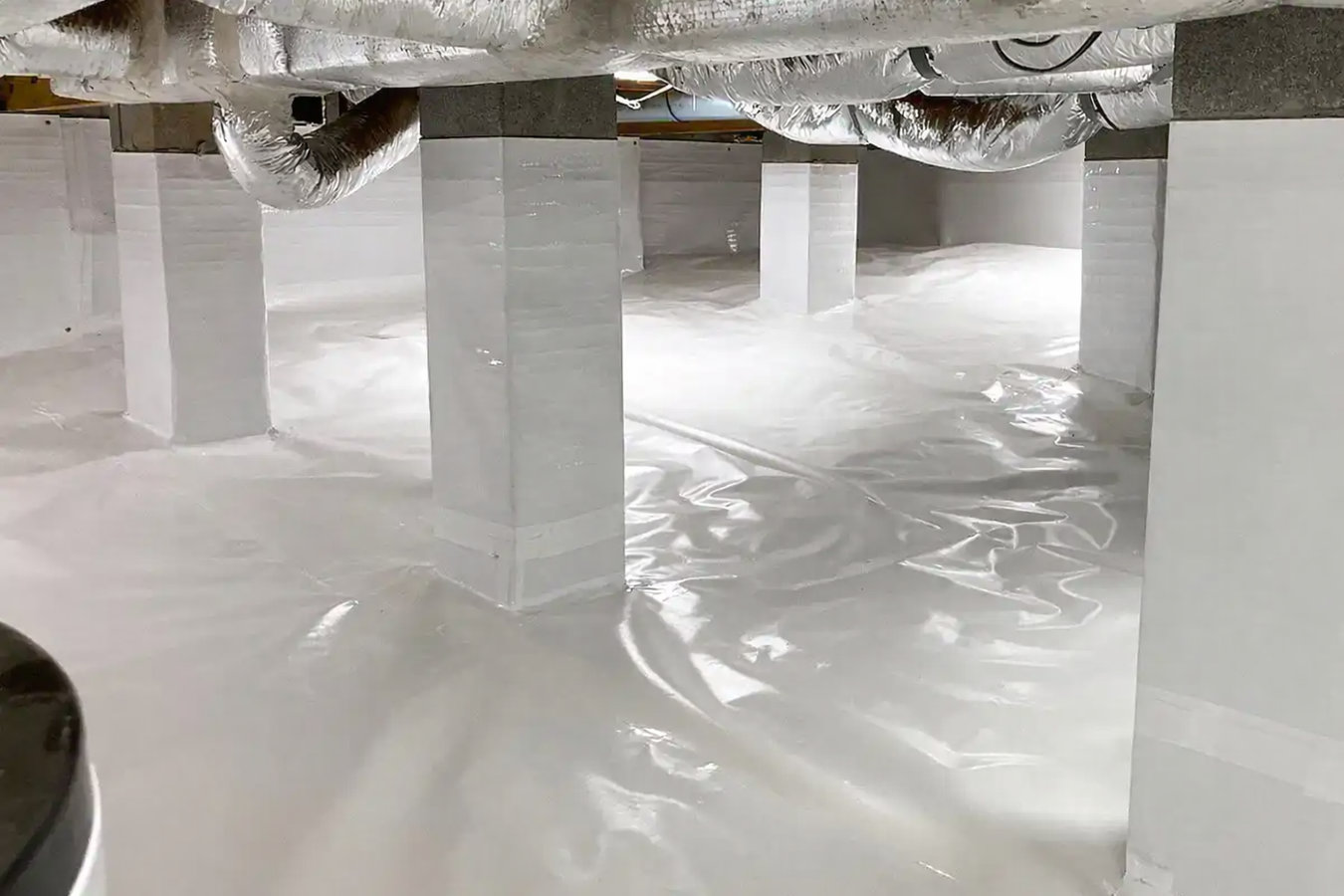
Ground moisture from South Burlington's clay-heavy soils works its way into your crawl space every season. A properly installed vapor barrier stops it before it reaches your floors, framing, and insulation.
Crawl space vapor barrier installation in South Burlington blocks ground moisture from rising into your home's framing and insulation, most jobs take one to two days and require no disruption to your living areas. The barrier is heavy plastic sheeting laid across the crawl space floor and up the foundation walls, sealed at every seam so moisture has no way in.
South Burlington sits in the Champlain Valley, where clay-heavy soils hold moisture long after rain and snowmelt. That moisture presses upward through a bare dirt crawl space floor all year, and it accelerates every spring during the freeze-thaw cycle. Homes built before 1990 - a large share of South Burlington's housing stock - were rarely built with crawl space moisture protection as a priority.
If you have noticed cold first-floor rooms, a persistent musty smell, or higher heating bills, the crawl space is often the starting point. Pairing a vapor barrier with crawl space insulation gives you the most complete moisture and thermal protection. Call (802) 352-8211 to schedule an assessment.
A damp, earthy odor that follows you from room to room - especially near the floor - is one of the clearest signs of crawl space moisture. In South Burlington homes built before 1990, bare soil may have been off-gassing mold spores into your living area for years. No amount of cleaning fixes a smell that starts underground.
South Burlington winters are long, and a damp crawl space loses heat fast. If your first-floor floors feel noticeably cold regardless of your thermostat setting, moisture is likely destroying the insulation below. A soft or slightly springy spot underfoot is more urgent - it can mean the structural wood is beginning to weaken.
Water droplets on pipes, white chalky patches on concrete walls, or dark staining on wood beams are all visible signs of active moisture movement. The white powder - called efflorescence - forms when water moves through concrete and leaves minerals behind. If you see it, moisture has been at work for some time.
Vermont's heating season runs from October through April. A damp crawl space reduces how effectively your insulation holds heat, forcing your furnace to run longer. If your energy bills have risen but nothing else has changed, degraded or moisture-soaked insulation under your floors is a common culprit worth investigating.
We install heavy-duty polyethylene vapor barriers in crawl spaces of all sizes across South Burlington and Chittenden County. Every installation includes full floor coverage, wall coverage several inches up the foundation, overlapped and taped seams, and anchored edges so nothing shifts over time. For homes where moisture pressure is more severe - particularly in lower-lying areas - we recommend pairing the barrier with crawl space insulation to address both moisture and thermal performance at the same time.
If the assessment reveals old, damaged, or moisture-saturated materials already in the space, we can handle removal before the new barrier goes in. For homeowners dealing with persistent dampness despite previous work, we can discuss whether full crawl space encapsulation - which seals the walls more completely and may include a dehumidifier - is a better fit. Every recommendation is based on what we actually find, not a pre-set package. We also handle vapor barrier installation in basements and other below-grade areas for homes where moisture enters through multiple points.
Best for homes with accessible crawl spaces and moderate moisture - covers the full floor and lower walls with sealed seams.
Best for homes with higher foot traffic into the crawl space, clay-heavy soils, or higher moisture pressure from seasonal groundwater.
Best for homes where both cold floors and moisture are concerns - addresses thermal performance and moisture control in one visit.
Best for homes with persistent moisture, standing water history, or crawl spaces in low-lying South Burlington neighborhoods near water.
South Burlington sits in the Champlain Valley, where clay-heavy soils left behind by ancient Lake Champlain hold water rather than draining it. That means the ground under your crawl space stays wet longer than it would in a sandier area - and the pressure on an unprotected crawl space floor is consistent, not occasional. Vermont's freeze-thaw cycle makes this worse every March and April, when the ground thaws and pushes a surge of moisture upward. Homeowners in communities like Shelburne and Williston face the same seasonal conditions and benefit from the same approach.
A large share of South Burlington's housing stock was built between the 1950s and 1980s, before crawl space moisture control was standard practice. Many of these homes have either no vapor barrier at all or a thin, deteriorated one that no longer functions. Efficiency Vermont - the state's energy efficiency utility - offers rebates and financing for weatherization projects, and crawl space improvements often qualify when paired with insulation work. A contractor familiar with those programs can help you access savings that make the investment more manageable.
We ask a few basic questions about your home and any moisture signs you have noticed. We reply within one business day to schedule an in-person assessment.
A contractor goes into your crawl space with a light to check the soil, existing materials, any moisture damage, and the size and access of the space. A quote without this visit is just a guess.
You receive a written estimate explaining what we found and why we are recommending a specific approach. This is the right time to ask about Efficiency Vermont rebates if insulation is also in scope.
The crew preps the space, installs the barrier with sealed seams and wall coverage, and removes all debris. Most standard crawl space jobs are finished in one day with no disruption to your living areas.
We reply within one business day. No pressure, no obligation - just a straight answer about what your crawl space actually needs.
(802) 352-8211Every estimate starts with a contractor physically going into your crawl space. A quote based on a phone call is not accurate enough to protect your home correctly. Since 2018, that has been our standard - no exceptions.
We use thick polyethylene sheeting as standard - not the thin drop-cloth material that tears under foot traffic or degrades quickly in Vermont's seasonal conditions. You can feel the difference when you compare it to a budget installation.
We are familiar with Efficiency Vermont's rebate and financing programs for weatherization work. If the project qualifies, we will tell you before you sign anything - not after. That kind of knowledge saves South Burlington homeowners real money.
South Burlington's clay-heavy Champlain Valley soils and long freeze-thaw seasons require a different approach than general national guidelines suggest. We have installed vapor barriers in this specific climate since 2018 and understand what holds up and what doesn't.
Every crawl space we install gets sealed the same way we'd want our own home done - full coverage, taped seams, and wall coverage that actually blocks the paths moisture travels. When the job is done, we show you the work.
Full vapor barrier service for basements and below-grade spaces alongside crawl space work.
Learn MoreAdd thermal performance to your crawl space once the moisture barrier is in place.
Learn MoreFall appointments fill up fast - reach out now and get your crawl space sealed while conditions are at their driest.