Loading...
Serving South Burlington, VT and surrounding areas. (802) 352-8211
South Burlington Insulation provides air sealing, attic insulation, blown-in, and spray foam services to Essex homeowners. We have served Chittenden County since 2018 and respond to every inquiry within one business day.
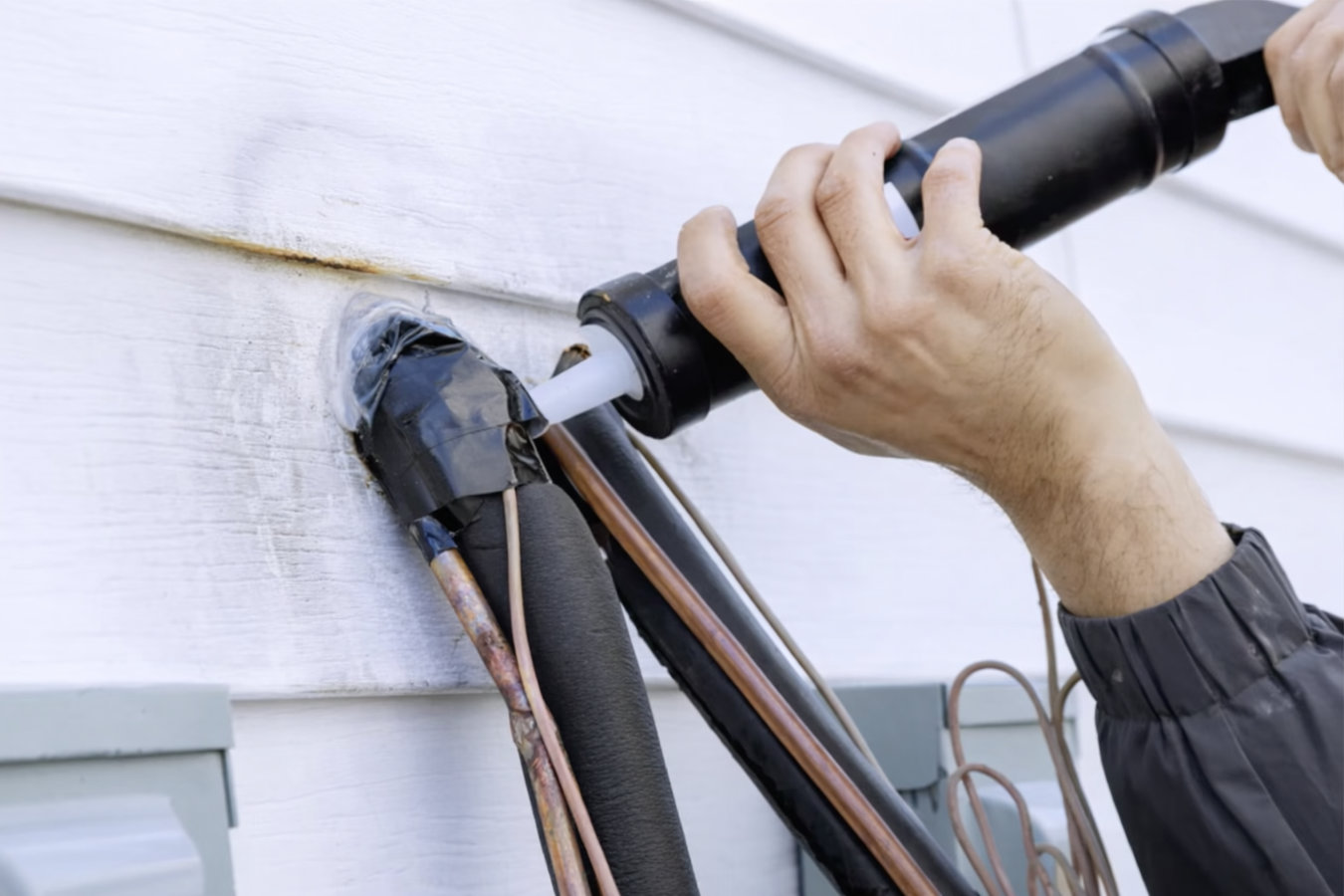
Essex homes built between the 1960s and the 1990s have air leakage built into their construction - gaps around plumbing chases, recessed lights, attic hatches, and rim joists that let conditioned air escape and cold air enter year-round. Our air sealing services address those pathways directly, making the insulation you already have work significantly better and reducing the load on your heating system.
Many Essex homes from the 1990s have attic insulation levels well below Vermont's current recommendations, which is why ice dams and high heating bills are so common in these neighborhoods. Adding insulation depth to the attic floor is the single highest-impact change most Essex homeowners can make for winter comfort and energy costs.
For Essex colonial and cape cod homes where the attic has irregular framing or existing materials that settled over the years, blown-in insulation adds consistent R-value coverage without requiring tear-out of existing work. It is also the most practical method for retrofitting wall cavities in older town homes where full renovation is not on the table.
Homes in the wooded subdivisions on Essex's outer edges often have rim joist areas that were never sealed, which creates cold floors and drafts along the first-floor perimeter every winter. Closed-cell spray foam applied at the rim joist bonds to the concrete foundation and wood framing in a single pass, creating both an air barrier and a thermal layer that fiberglass cannot replicate.
Essex homes from the 1960s and 1970s were typically built with 2x4 wall framing and minimal cavity insulation that has settled or degraded over decades of Vermont winters. Adding insulation to those wall cavities through injection or blown-in methods makes a real difference in how warm the house feels without requiring any demolition of the finished interior.
Full basements are the norm in Essex because the Vermont frost line requires deep foundations, and most of those basements have bare concrete walls that allow cold to radiate into the floor system above. Spring snowmelt and mud season can increase moisture pressure on uninsulated basement walls in lower-lying Essex neighborhoods, making insulation and vapor control particularly valuable here.
The Town of Essex grew steadily as a suburb of Burlington from the 1960s through the 1990s, and most of its housing stock reflects that era. Colonials, capes, and split-levels built on modest to mid-sized lots make up the core of the residential market, and these homes are now 30 to 60 years old. The insulation in most of them has never been upgraded. Vermont energy codes have changed significantly since these homes were built, and the gap between what they have and what they need shows up every winter in heating bills, ice dams, and rooms that never seem to get warm enough.
Essex winters follow the same patterns as the rest of Chittenden County: ground frost reaching several feet deep, repeated freeze-thaw cycles through late winter, and Vermont mud season arriving each spring with saturated soil and snowmelt that tests older foundations. Homes in Essex's newer subdivisions near wooded edges of town face additional debris loads in gutters and driveways, and the larger lots mean drainage issues are more common. Homes closer to Essex Junction share the village's older housing stock challenges: postwar construction, minimal original insulation, and buildings that have seen decades of Vermont weather without a full thermal upgrade.
Our crew works throughout Essex regularly, and we understand the local conditions that affect insulation work here. The town covers a lot of ground - from the more compact streets near Essex Junction to the larger-lot subdivisions toward the town's rural edges - and the housing in different parts of town has different needs. Near the Junction, postwar construction with minimal insulation is the norm. Out toward the newer subdivisions built in the 1990s and 2000s, the issue is typically attic depth and rim joist air sealing rather than absent insulation.
Permit questions for insulation work in the Town of Essex are handled by the Essex Planning and Zoning office. Note that the Town of Essex and the Village of Essex Junction have separate permit administrations - if your address is in the village itself, requirements may differ. We check applicable requirements before every job and handle permit coordination where needed. Essex is easy to reach from our South Burlington location via Route 2 or Route 15, and we can typically schedule an initial assessment within a few days of your call.
We also serve homeowners in neighboring Williston, VT and nearby Colchester, VT. If your property sits between municipalities or in a newer development that is hard to place on a map, just call and we will confirm your area right away.
Call or submit the contact form and describe what you are experiencing - drafts, cold rooms, high heating bills, or a specific area of the house you want looked at. We reply to every Essex inquiry within one business day.
We visit your Essex home, inspect the insulation and air sealing in the relevant areas, and give you a written price before any work is scheduled. There is no cost for the estimate and no pressure to move forward.
Most Essex insulation jobs are completed in one to two days. Air sealing alone is often a half-day job. We work around your schedule, keep the work area tidy, and patch any access holes from blown-in work before we leave.
When the job is done we walk through with you, confirm the work meets spec, and answer any questions about what was installed and why. We stand behind every job - if something comes up after we leave, call us.
We serve homeowners throughout Essex, VT - from the older neighborhoods near the Junction to the newer subdivisions on the town's edges. Free estimates with no obligation.
(802) 352-8211Essex is one of Vermont's most populated towns, with around 22,000 residents spread across two distinct areas: the incorporated village of Essex Junction, with its own downtown and walkable center around Five Corners, and the surrounding town, which is mostly residential neighborhoods, subdivisions, and some rural stretches with larger wooded lots. The housing stock covers a wide range of eras - from the postwar ranch and split-level homes built in the 1950s and 1960s near the Junction, to the colonial and cape cod subdivisions developed from the 1970s through the 1990s, to newer construction in more recent decades. The majority of homes are owner-occupied, reflecting a town where families put down roots for the long term.
Essex sits just northeast of Burlington and is anchored economically by the GlobalFoundries semiconductor plant in Essex Junction, one of Vermont's largest private employers. Many residents commute to Burlington along Route 2 or I-89, while others work locally in Essex's retail corridors and professional offices. Neighboring Essex Junction, VT shares much of the same history and housing character, and homeowners in both the village and the surrounding town face very similar insulation challenges. We serve both areas from our South Burlington base, along with nearby Burlington, VT and the broader Chittenden County region.
High-density foam providing superior moisture and thermal barriers.
Learn MoreProfessional vapor barrier installation to prevent moisture damage.
Learn MoreDrafts, ice dams, and high heating bills are problems we fix every day in Essex. Call South Burlington Insulation now or submit the form for a free, no-pressure estimate.