Loading...
Serving South Burlington, VT and surrounding areas. (802) 352-8211
South Burlington Insulation provides home insulation, attic upgrades, blown-in wall insulation, and basement insulation to Burlington homeowners. We have served the greater Burlington area since 2018 and reply to all inquiries within one business day.
Burlington's housing stock ranges from century-old Victorians on the Hill to postwar bungalows in the South End, and most of these homes were built long before modern energy standards existed. Our home insulation service starts with a full assessment so we can prioritize the improvements that will have the biggest impact on your specific house.
Burlington averages about 80 inches of snow per year, and ice dams form when heat escapes through a poorly insulated attic and melts snow that refreezes at the eaves. Upgrading attic insulation to the recommended depth for Vermont's climate is the most effective way to prevent ice dams and reduce heat loss.
Many of Burlington's older homes - especially the two- and three-family houses in the Old North End - have hollow exterior wall cavities with no insulation at all. Dense-pack blown-in fills those cavities without disturbing original siding or plaster, which matters in neighborhoods where historic character is worth preserving.
Burlington's older homes often have stone or brick foundation walls that are not insulated at all. Insulating the basement walls and rim joist reduces heat loss through the foundation and helps keep the basement dry, which matters especially in the spring when thaw conditions push moisture upward through older foundations.
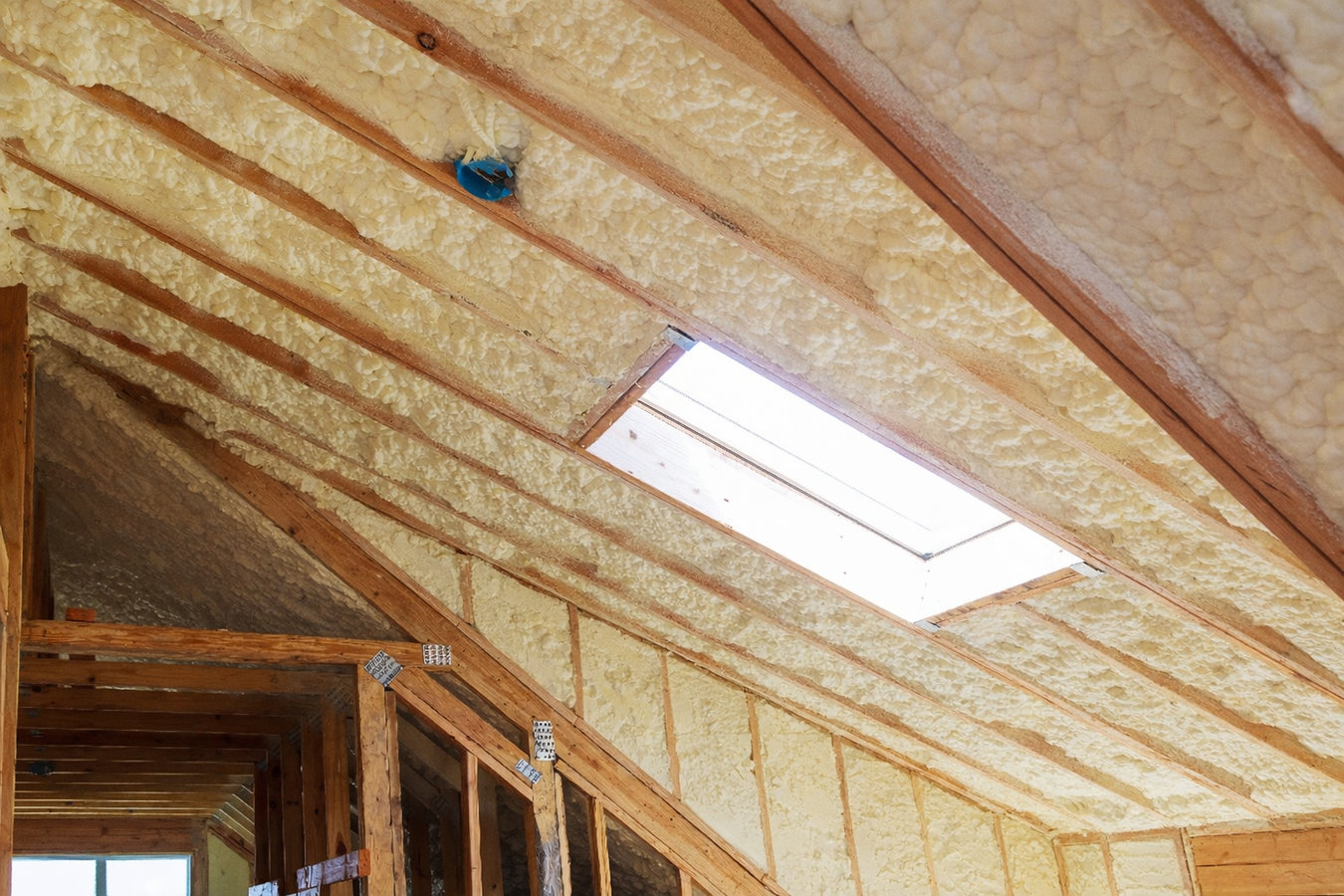
Spray foam is one of the most effective materials for sealing rim joists, crawl spaces, and irregular foundation wall surfaces common in Burlington's older homes. It creates an air barrier and thermal barrier in a single application, making it especially useful in homes where conventional batt insulation would not seal properly.
Burlington's old wood-frame homes have accumulated decades of settling, renovation, and patching that leaves gaps around pipes, wires, and framing members. Air sealing those paths before adding insulation is the step that most homeowners skip - and the one that makes the biggest difference in how the finished project actually performs.
Burlington is one of the oldest cities in Vermont, and according to U.S. Census data, a large share of its housing stock was built before 1940 - with many homes dating to the late 1800s or early 1900s. These buildings were constructed well before any meaningful energy code existed, and most still have their original wall framing with little to no insulation inside. Heating a home like that through a Vermont winter costs far more than it should.
The city's climate adds pressure. Burlington averages around 80 inches of snow per year, making it one of the snowiest mid-sized cities in the country, and the lake effect from Lake Champlain can drive temperatures down sharply on winter nights. Ice dams are a persistent problem on the older homes with low-slope or complex rooflines common on the Hill and in the Old North End. Spring thaw also brings foundation and drainage challenges - Burlington's hillside topography means water from higher lots can run toward homes during the March and April melt, and older stone foundations are particularly vulnerable to seasonal moisture. Upgrading insulation and vapor management is one of the most durable investments a Burlington homeowner can make.
Our crew works throughout Burlington regularly, and we understand the local conditions that affect insulation work here. Permit requirements for Burlington renovation projects are handled by the City of Burlington Department of Planning and Zoning, and we coordinate any applicable approvals before work begins.
Burlington's neighborhoods each have their own character and building stock. The Hill neighborhood near the University of Vermont campus has some of the city's largest Victorian and Colonial homes, many of which have never had their exterior walls insulated. The Old North End is dense with two- and three-family houses from the late 1800s - complex structures with multiple units, shared walls, and original plaster interiors. The South End has a mix of craftsman bungalows and postwar ranches. We approach each neighborhood and each house type differently, because the right solution for a 1920s bungalow is not the same as the right solution for a 1905 three-decker.
Burlington sits immediately adjacent to South Burlington, VT, and we serve both communities. We also work in nearby Winooski, VT, which borders Burlington to the north and has its own concentration of older housing stock.
Call or submit the contact form and tell us what you are dealing with - drafty rooms, high heating bills, ice dams, or a specific space you want to address. We reply to every Burlington inquiry within one business day.
We visit your Burlington home, evaluate the current insulation, look for air leaks, and give you a written estimate with a clear price. The assessment is free and there is no obligation to move forward.
We book the installation at a time that works for you. Most Burlington insulation jobs are completed in one day, and you will know the full scope and timeline before we start.
When installation is complete, we walk you through exactly what was done and clean up the work area fully. You can call us with any questions after the job - we stand behind our work.
Free estimate, written price, no pressure. South Burlington Insulation serves Burlington, VT and surrounding communities.
(802) 352-8211Burlington is Vermont's largest city, with about 45,000 residents, and it sits on the eastern shore of Lake Champlain with the Adirondack Mountains visible across the water. The city is home to the University of Vermont, founded in 1791, and Champlain College, which together shape the Hill neighborhood and surrounding streets. Church Street Marketplace, the city's outdoor pedestrian shopping district, is one of the most recognized features of downtown Burlington and a gathering point for the community year-round. The waterfront along Lake Champlain is equally central to Burlington's identity, with a public bike path and parks used by residents in every season.
Burlington's neighborhoods reflect its age and history. The Hill has some of the city's largest and oldest homes - Victorian and Colonial Revival houses built between the 1880s and 1920s. The Old North End is densely packed with two- and three-family homes from the same era. The South End has craftsman bungalows and postwar ranches. Most of the housing stock across these neighborhoods was built before modern insulation standards, making Burlington one of the areas in Vermont where weatherization improvements have the clearest payback. We are proud to serve Burlington alongside nearby communities including Colchester, VT and Shelburne, VT.
High-density foam providing superior moisture and thermal barriers.
Learn MoreProfessional vapor barrier installation to prevent moisture damage.
Learn MoreOlder Burlington homes lose more heat than newer ones. Get an assessment this week and know exactly what your home needs before next winter.